Is There a Non-Surgical Solution for Prostate Enlargement? Discover Comfortable Treatment with PAE
Hello, I am Prof. Dr. Aykut Recep Aktaş. My specialisation is Interventional Radiology, one of the rapidly developing branches of modern medicine that has revolutionised the treatment of many diseases. At our clinic, we aim to enhance our patients' quality of life by offering the most current and minimally invasive treatment methods.
Prostate enlargement, also known as Benign Prostatic Hyperplasia (BPH), is a common condition among men as they age, significantly affecting their quality of life. This condition can lead to symptoms such as difficulty urinating, frequent urination, and nocturnal urination. Traditionally treated with surgical interventions, BPH now has a non-surgical, effective, and comfortable alternative: Prostate Artery Embolisation (PAE).
What is Prostate Artery Embolisation (PAE)?
PAE is a minimally invasive, non-surgical method for treating prostate enlargement, performed by Interventional Radiology specialists. In this treatment, specific catheters are inserted through an artery in the groin or wrist to target the arteries supplying blood to the prostate (prostatic arteries). Tiny, millimetre-sized particles are then injected into these vessels to block or significantly reduce blood flow.
How Does PAE Work?
By restricting blood flow to the prostate, the enlarged prostate tissue is deprived of nutrients and begins to shrink over time. This shrinkage reduces the pressure the prostate exerts on the urethra, thereby removing obstructions to urinary flow and significantly alleviating BPH-related symptoms. Patients typically begin to feel relief within a few weeks post-treatment, with symptoms gradually improving.
Advantages of PAE Over Traditional Surgeries
- Non-Surgical Treatment: It is a procedure performed under local anaesthesia, requiring no incisions or general anaesthesia.
- Minimally Invasive: No external incisions are made on the body; access is gained solely via blood vessels.
- Rapid Recovery Process: Hospital stay is typically 1 day or less. Patients can quickly return to their daily activities.
- Lower Risk: The risks of complications such as bleeding, infection, impotence, and retrograde ejaculation (semen flowing backward) are significantly lower compared to traditional surgical methods.
- Prostate Size Irrelevant: It is a viable method even for very large prostates.
- Reduces Catheterisation Need: Offers patients who are constantly catheterised a chance to become catheter-free.
At our clinic in Antalya, we prioritise our patients' comfort and safety, creating personalised treatment plans. PAE yields highly successful outcomes when appropriate patient selection is made and the procedure is performed by an experienced Interventional Radiology specialist.
Frequently Asked Questions
Who is PAE suitable for?
PAE is a suitable option for BPH patients who have not responded to medication, have high surgical risks, prefer not to undergo surgery, wish to preserve their sexual function, or are constantly catheterised. However, definitive suitability must be determined by an experienced interventional radiology specialist after a detailed assessment.
How long does the PAE procedure take?
The procedure typically lasts between 1 to 3 hours. This duration may vary depending on the anatomical structure and complexity of the prostatic arteries.
What is the recovery process like after treatment?
Patients are generally discharged on the same day or the following day. For the first few days, mild groin pain or a burning sensation during urination may be experienced, but these symptoms can usually be controlled with painkillers and disappear quickly. Most patients can return to their normal daily activities within a few days.
What is the success rate of PAE, and when are results seen?
The success rate of PAE is quite high, with improvements in symptoms reported at 80-90% in literature. Initial relief typically begins to be felt within a few weeks, with the most significant improvement observed within 3-6 months.
Are sexual functions affected after PAE?
PAE has a much lower impact on sexual functions compared to traditional surgical methods. In fact, some studies have even reported improvements in sexual function. The risk of retrograde ejaculation (semen flowing backward) is very low compared to traditional surgeries.
You Might Also Be Interested In: Other Non-Surgical Solutions in Interventional Radiology
At our clinic, in addition to Prostate Artery Embolisation, we successfully implement many other innovative, non-surgical treatment methods offered by Interventional Radiology. Our philosophy is to provide maximum benefit to our patients through the least invasive means. Examples from our other areas of expertise include:
- Fusion Biopsy: An advanced technology biopsy method for precise and accurate results in prostate cancer diagnosis.
- Fibroid Treatment: Non-surgical treatment of uterine fibroids through Uterine Fibroid Embolisation (UFE).
- Thyroid Ablation: Shrinking thyroid nodules without the need for surgery, using methods such as radiofrequency or microwave ablation.
- Varicose Vein Treatments: We offer comfortable and effective varicose vein treatments using methods such as endovenous laser ablation (EVLA), radiofrequency, or microwave ablation. While acknowledging that the endovenous glue (cyanoacrylate) method is widely used by many physicians today, in my own clinical practice, I choose not to use this method due to certain reported complication risks and long-term outcomes in the literature, preferring methods such as microwave, radiofrequency, or endovenous laser ablation (EVLA) for the benefit of our patients.
For our robotic technologies in interventional radiology, you can explore our prostate biopsy page. 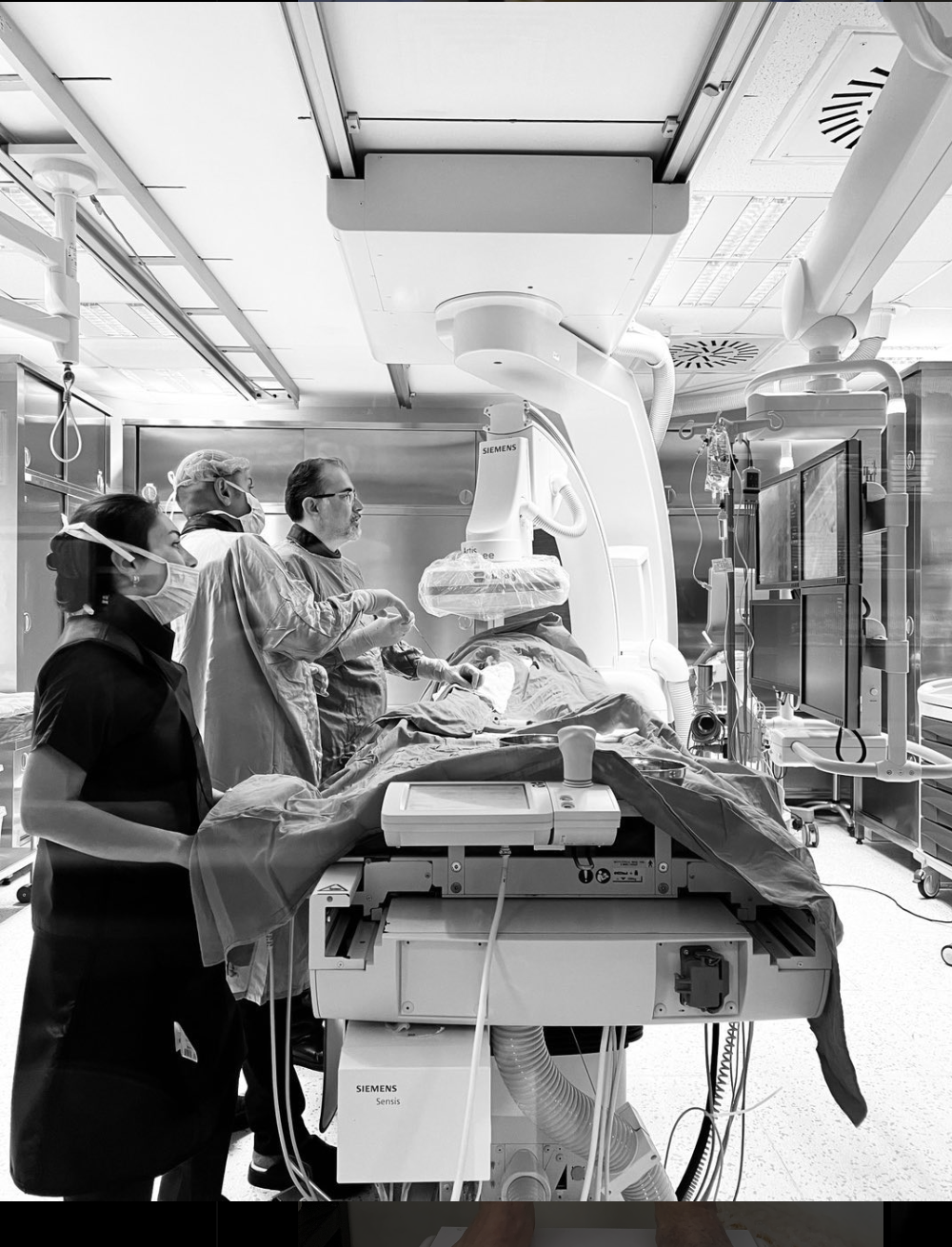
If you are experiencing symptoms of prostate enlargement and are seeking a non-surgical solution, we are here to provide you with a personalised assessment and treatment plan at our clinic in Antalya. Please do not hesitate to contact us for more information or to book an appointment. Remember, it is crucial to discuss the most accurate and up-to-date treatment options for your health with an experienced interventional radiology specialist.